Country reference
Germany work permits and salary thresholds
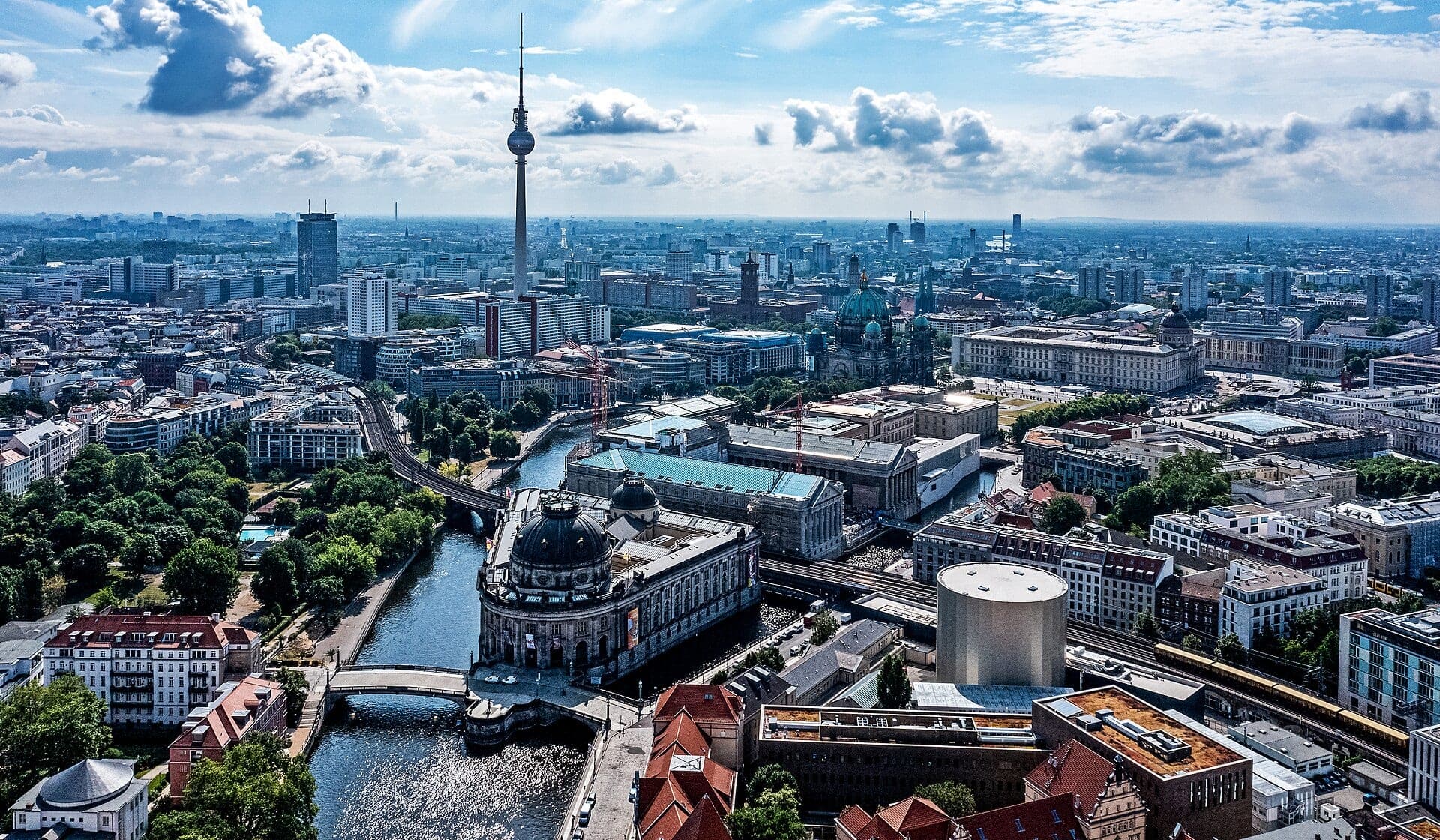
Photo: Kasa Fue, derivative work by Georgfotoart · CC BY-SA 4.0
- What is the 2026 salary threshold for the EU Blue Card (Blaue Karte EU) in Germany?
- €50,700 per year (2026).
- Does the EU Blue Card (Blaue Karte EU) in Germany require a job offer?
- Yes. A signed job offer or employment contract is part of the application.
EU Blue Card (Blaue Karte EU)
Germany does not publish a Blue Card salary figure directly — the law fixes it as a share of the pension insurance ceiling, and that ceiling is revised every year. For 2026 it works out at €50,700 gross a year, or €45,934.20 if your occupation is on the shortage list or you graduated within the last three years.
Salary threshold by year
- Standard
- €50,700
- Reduced criterion
- €45,934
What the amount is:Gross per year. The general threshold is 50% of the annual contribution assessment ceiling for the German state pension (€101,400 in 2026); the reduced one is 45.3% of the same ceiling. Both are fixed by §18g of the Residence Act, so they move whenever the ceiling is revised.
Does your offer clear the threshold?
The comparison runs in your browser. Nothing you type is sent anywhere, stored or logged. It checks your figure against the published threshold — it is not a tax calculation and not advice.
Conditions
- A university degree, or a qualification recognised as comparable in Germany.
- A concrete job offer or employment contract in Germany.
- Pay at or above the threshold that applies to your case.
- The reduced threshold covers listed shortage occupations and graduates of the last three years.
- The cheaper threshold costs an extra approval. The standard route is granted without the consent of the Federal Employment Agency; the reduced one is granted only with it. Section 18g of the Residence Act says so in the same sentence that sets the percentages, and it affects how long the process takes rather than whether you qualify.
- A degree is not the only way in. Section 18g paragraph 2 allows a Blue Card without a recognised degree for occupations in ISCO-08 groups 133 and 25 — information and communications technology managers and professionals — at the same 45.3% threshold, if the Employment Agency consents and the applicant’s skills and knowledge are established. This route is missing from most summaries of the German Blue Card.
Opportunity Card (Chancenkarte)
One of the few routes on this site that does not need a job offer. It grants up to a year in Germany to look for qualified work, and it is not a free year: you must fund yourself, and you may work at most 20 hours a week while you search. Extending it beyond that year requires an actual contract.
Conditions
- No job offer is required to be granted the card. That is the point of it, and it is unusual: almost every other route on this site starts from an employer.
- You qualify either by already being a recognised skilled worker, or by scoring enough points on a defined scale.
- The points are a table in the law, not a vague assessment. Twelve criteria carry set weights — a foreign qualification needing adaptation is worth 4, German at B2 or better 3, at B1 2, at A2 1, English at C1 1, five years of relevant experience in the last seven 3, two years in the last five 2, a shortage occupation 1, being 35 or under 2, being 36 to 40 1, six months of prior continuous residence in Germany 1, and a partner applying alongside you 1.
- The minimum is six points. The law states it in one sentence, and it is the number the whole scheme turns on.
- The card is granted for up to one year to search. It can be extended by up to two further years, but only once you hold an employment contract or a binding offer for qualified work — the extension is not a second search year.
- It is granted only if your livelihood is secured. The law says so plainly, and it means the search year is self-funded.
- While holding it you may work an average of at most 20 hours a week, plus trial employment of up to two weeks that is qualified or training-related. That ceiling is the detail most summaries leave out, and it is what decides whether a year of searching is financially possible for you.
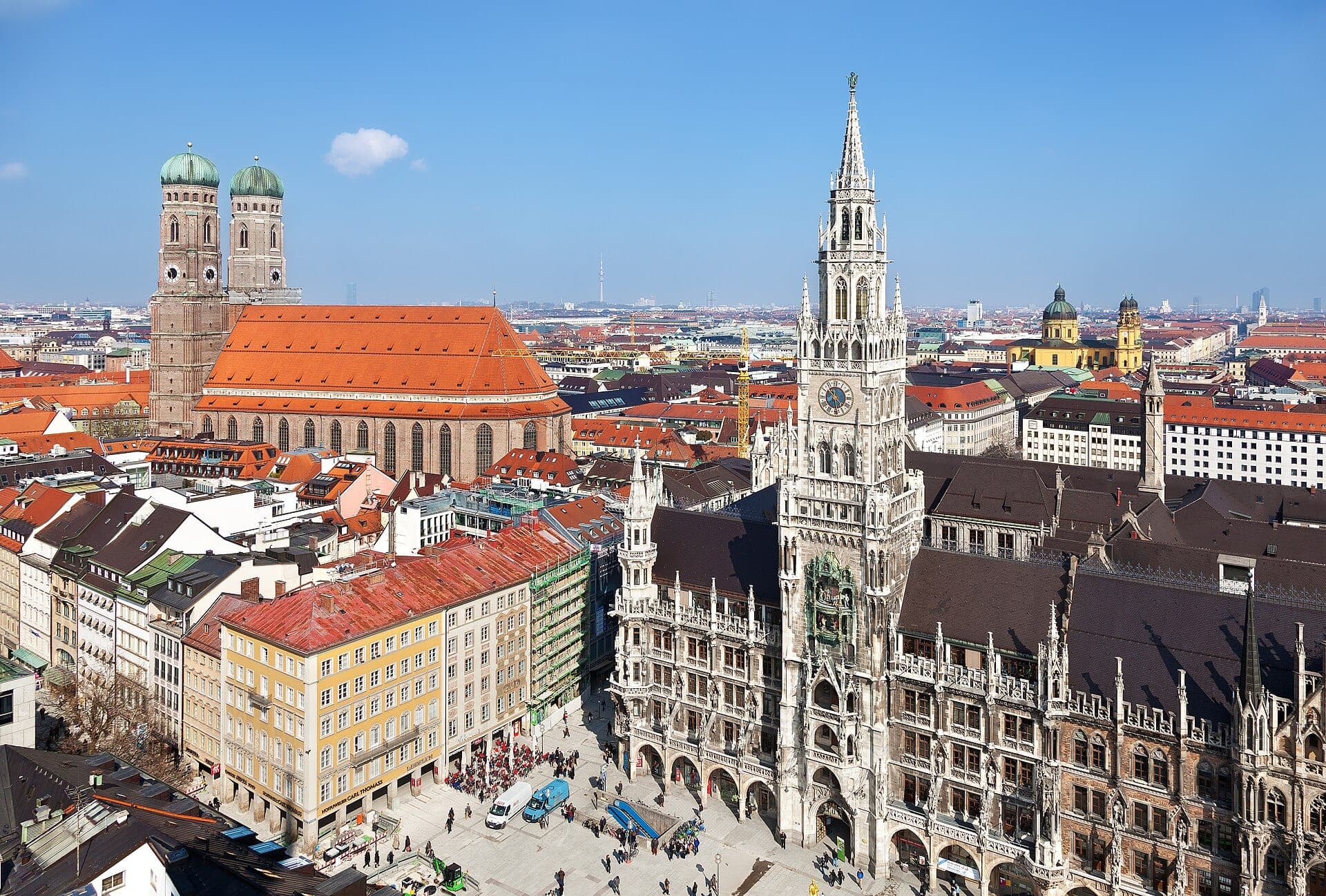
Photo: Thomas Wolf, www.foto-tw.de · CC BY-SA 3.0 de
Is that threshold actually high?
A salary threshold means nothing on its own. Here it is next to what people in the country are actually paid, using official statistics you can check yourself.
1.09× the median full-time wage. That is what the visa threshold asks for.
- Median full-time pay (2022)
- €46,721 a year
- Eurostat structure of earnings survey, run every four years; full-time employees, industry, construction and services excluding public administration.
- Average full-time pay (2022)
- €55,648 a year
- Eurostat structure of earnings survey, run every four years; full-time employees, industry, construction and services excluding public administration.
- Statutory minimum, per month (2026-S2)
- €2,343
- Eurostat; statutory monthly minimum wage, gross, revised twice a year.
Earnings come from each country's official statistics, and every authority publishes on its own schedule — the period is shown next to each figure, and the publisher under it. Statutory minimum wages are revised twice a year and are current.
The ratio compares the current threshold with the most recent earnings survey, so the two figures are from different years. Treat it as an order of magnitude, not a precise multiple.

Photo: Kasa Fue · CC BY-SA 4.0
More about Germany
- Germany income tax brackets: 2024, 2025 and 2026 compared
The rates have not changed in three years — 14%, 42% and 45% are identical throughout. Every threshold moved. And the 2024 figure most sources print is superseded.
- Why Germany's Blue Card salary changes every January
Germany does not decide the figure. It is calculated from the pension insurance ceiling, which means it moves every year without anyone announcing a policy change.
- Moving from the Netherlands to Germany
- Moving from the United Kingdom to Germany
- Moving from Germany to the Netherlands
Quoting a figure from this page
Every number here is checked against the authority that publishes it, on the date shown. Those numbers change without announcement — one on this site was correct for three months and then quietly was not. So if you quote a figure, quote the date with it, and check the source before you rely on it.
Career Space, “Germany work permits and salary thresholds”. Checked 2026-08-11. https://career-space.com/en/visa/germany
Sources
- 01Sozialversicherungsrechengrößen 2026BMAS — Federal Ministry of Labour and Social Affairs ·
- 02§ 18g AufenthG — Blaue Karte EUBundesministerium der Justiz — Gesetze im Internet ·
- 03§ 20a AufenthG — Chancenkarte (opportunity card)Bundesministerium der Justiz — Gesetze im Internet ·
- 04Monthly minimum wages (earn_mw_cur)Eurostat ·
- 05Structure of earnings survey: annual earnings (earn_ses_annual)Eurostat ·
Every figure here comes from an official source and carries the date we checked it. How we work with data.
This page is information, not advice. We are not an employer, a recruitment agency, a visa centre or an immigration adviser, and we are not affiliated with any government body. Rules change — confirm against the official source before you act.