MOVING FROM → TO
Moving from the Netherlands to Spain
This move has a special tax regime at both ends, as do the two moves into Portugal. You give up the Dutch 30% ruling and you can pick up the Spanish Beckham Law — and the second one has a condition that this particular route almost always satisfies.
- What is the work-visa salary threshold in Spain?
- €41,356 a year for a standard work permit (2026).


Enter the salary from your offer to compare all countries at once.
The comparison runs in your browser. Nothing you type is sent anywhere, stored or logged. It compares your figure with published thresholds and rates — it is not a tax calculation and not advice.
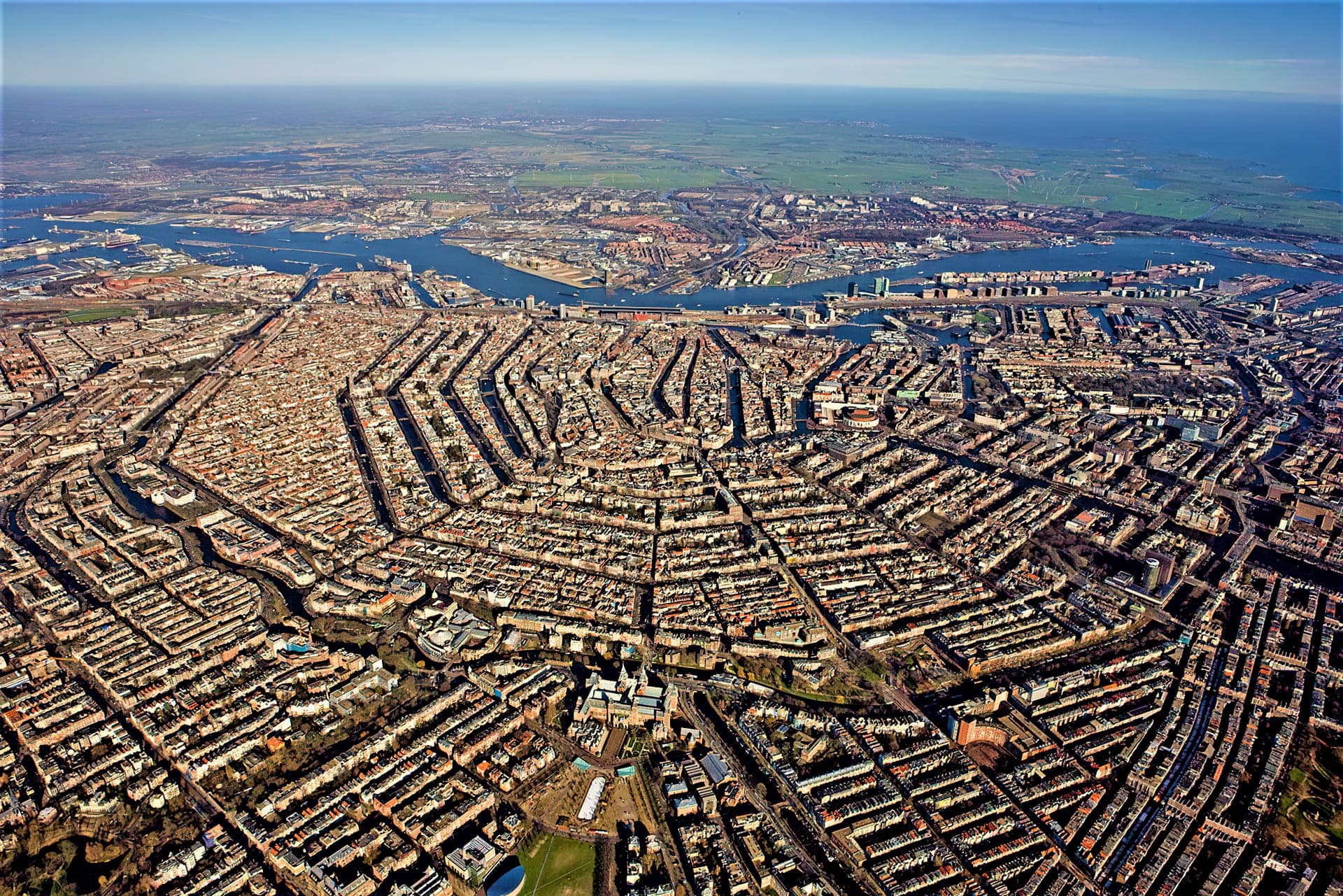
LeavingAmsterdam 
ArrivingMadrid
Photo credits and licences
- Amsterdam — Andrés Barrios · CC BY-SA 4.0
- Madrid — Zarateman · CC0
No visa, and that is the whole visa section
Both countries are in the EU. If you hold the nationality of an EU or EEA state you move under free movement: no work permit, no salary threshold, no sponsor. None of the numbers that dominate our other corridors apply to you here.
For non-EU nationals the salary bar is on the Spanish visa page on this site: the ministry publishes €41,356.36 a year for both the EU Blue Card and the national highly qualified route, derived from the latest average wage, with a lower €33,085.09 available only on the Blue Card.
The five-year condition works in your favour on this route
The Spanish regime — article 93 of Ley 35/2006, the one everyone calls the Beckham Law — requires that you were not resident in Spain for the five tax years before the year you move. Someone who has been living and working in the Netherlands clears that by definition, unless they were in Spain earlier in that window.
This is the mirror image of the Dutch 150 km rule, which catches people arriving from just over the border. Read them together: the Dutch scheme asks where you were, the Spanish scheme asks where you were not.
Both regimes are time-boxed, and the clocks do not join up
The Dutch exemption runs up to five years and ends when you stop being employed in the Netherlands. The Spanish regime covers the year you change residence plus the five following tax years. Time already spent under the Dutch ruling does not shorten the Spanish one — but it does not extend anything either. Two separate windows, each with its own start.
The shape of the tax bill changes completely
Under the Spanish regime you are taxed at a flat 24% on employment income up to €600,000. Above that ceiling the rate becomes 47% — the ceiling switches the rate, it does not end the regime, which is a distinction worth getting right if you are near it.
The Netherlands is progressive: 35.75% inside the first band from the first euro, with credits applied afterwards, and 49.5% above €78,426. So up to €600,000 the Spanish flat rate sits below the Dutch entry rate, before either regime is applied; above that it is 47%.
The comparison you actually need is different, though. If the 30% ruling applied to your Dutch salary, part of your pay was untaxed, so compare the Spanish 24% against your Dutch effective rate with the exemption — not against 35.75%.
Two things the law itself excludes
Professional sportspeople are written out of the Spanish regime by the statute, despite the nickname it carries. And regional income tax is not covered by anything on this page: ordinary Spanish IRPF is the sum of a state scale and the scale of the autonomous community you live in, so the total depends on where in Spain you land. The Beckham regime replaces that calculation while it lasts; the Spanish tax page on this site shows the state scale and lets you add your community's.
Both countries in detail
Netherlands
Spain
Quoting a figure from this page
Every number here is checked against the authority that publishes it, on the date shown. Those numbers change without announcement — one on this site was correct for three months and then quietly was not. So if you quote a figure, quote the date with it, and check the source before you rely on it.
Career Space, “Netherlands to Spain: from the 30% ruling to the Beckham Law”. Checked 2026-08-11. https://career-space.com/en/move/netherlands-to-spain
This page is information, not advice. We are not an employer, a recruitment agency, a visa centre or an immigration adviser, and we are not affiliated with any government body. Rules change — confirm against the official source before you act.